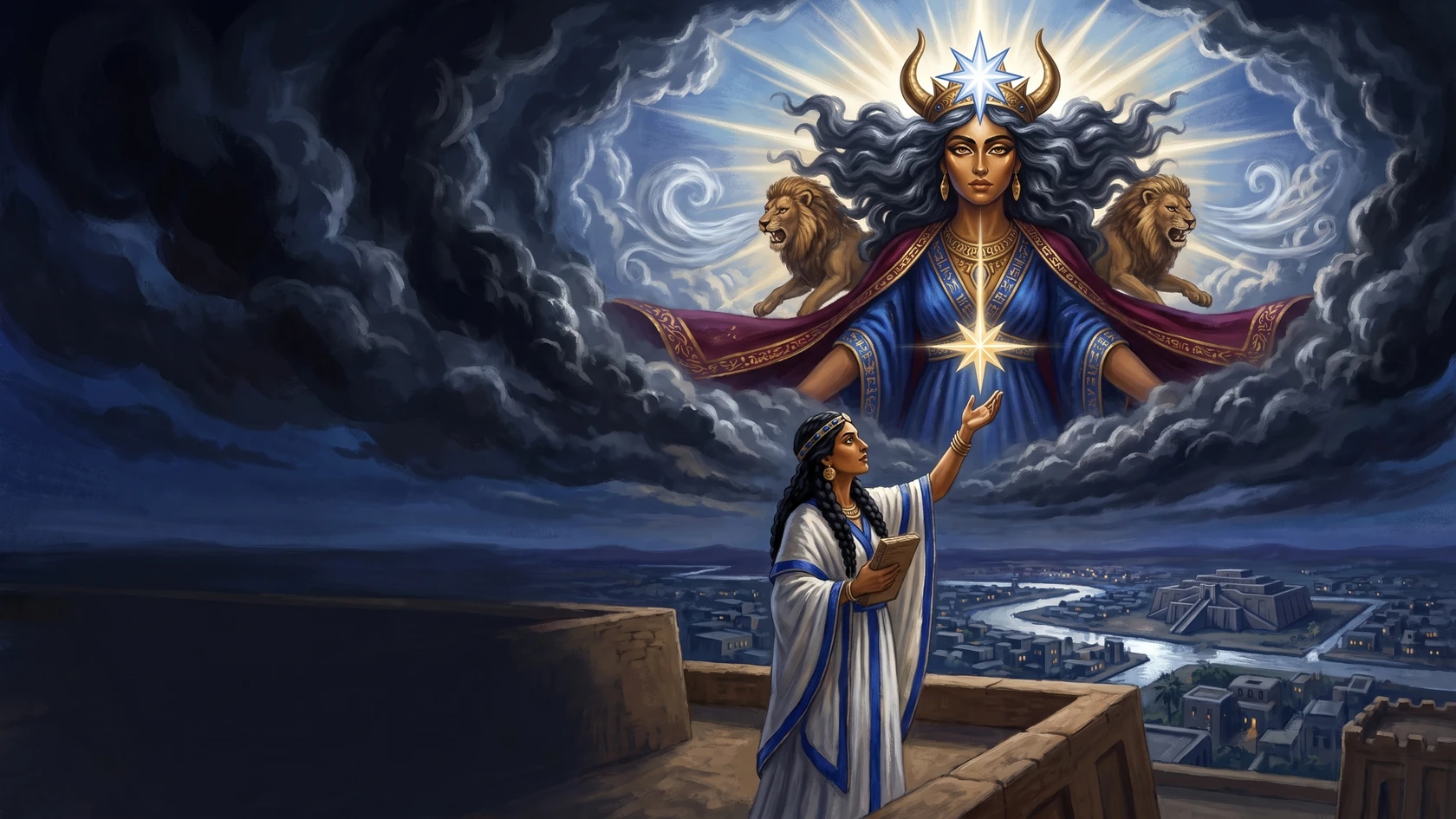
This book begins with a historical person. Enheduanna was a high priestess at Ur and is often described as the earliest literary author known by name. In the composition now called The Exaltation of Inanna, she names herself, describes her expulsion, calls to the goddess Inanna, and ends with an accepted offering and sweet light.
The book keeps three layers visible. The surviving hymn supplies Enheduanna’s voice, exile, thorns, divine silence, appeal, and final light. Historical scholarship supplies the setting of Akkad and Ur, her royal family, her priestly office, and the later clay copies. The storm’s limit and its lesson about agency and responsibility belong to this new children’s adaptation.
It is not Inanna’s Descent. That is a different, anonymous myth. This book also does not call the hymn the first book or claim that writing it alone returned Enheduanna to power. Its central imaginative question is narrower: when a person finally finds the power to answer injustice, how can that power protect people without becoming another danger?